Read our editorial on the significance of strikes here
Transit Worker Correspondent
For the third time in as many years, the Philadelphia-area transit authority SEPTA has avoided a strike as workers voted 12/17 to approve the tentative contract agreement (TA) between the company and their union, Transport Workers Union (TWU) Local 234. Pennsylvania Governor Josh Shapiro stepped into negotiations and forced through a deal at the final hour as the union threatened to strike over the company’s insistence on raising healthcare premiums and maintaining a two-tiered healthcare system where new hires had to work 15 months before qualifying for health benefits.
Of the 5,000 workers under TWU local 234, 1,794 voted to approve the contract while 73 voted no, meaning the contract passed with a 35.9% “yes” vote according to the union, not the “overwhelming majority” bragged about by monopoly media outlets. On 12/18, SEPTA’s board of directors approved the contract as well.
The newly-approved contract will be in effect for two years, in contrast to the last two contracts which ran only one year each, setting the union up for a relatively quick negotiation timetable and freeing the workers for strike action to fight for their rights and better working conditions. The last time SEPTA workers struck was for six days in 2016.
The TWU local president is paraphrased in monopoly media praising the two-year lifespan of the contract: “with the FIFA World Cup, MLB All-Star Game, and America’s 250th birthday coming to Philadelphia in 2026, both parties agreed to a two-year contract so as not to interrupt service during these global events,” meaning the union brass graciously agreed to labor peace on behalf of the capitalists set to profit from these events, negating the massive leverage the workers would have had for rapid advances with a strike disrupting these events.
A transit worker told The Worker that this is a pattern: “They did that funny business when we were in the World Series [in 2022]. When the Phillies were in the World Series we were about to go on strike. Then all of a sudden we got a contract out of nowhere. And it’s the same contract,” meaning without advances, in effect being a concessionary contract as cost of living rises for the working class.
As previously reported, the contract stipulates a modest 3.5% pay raise each of its two years, an increase of night differential pay from the measly $0.15 an hour to a still-meager $1 an hour, as well as minor improvements in the pension plan and days off. The agreement postpones the struggle around autonomous buses to a later date while leaving in language that places the power to implement automation—and its ensuing mass layoffs—in the hands of the company.
SEPTA faces a massive budget shortfall as the Democratic and Republican mafias spar over funding sources in the state legislature, and are operating on a two-year fund released by the governor which reversed massive service cuts briefly in place in September. A bus driver told The Worker that Gov Shapiro is positioning himself for a presidential run in the 2028 electoral farce through throwing his weight around in labor struggles.
SEPTA attempted to pit workers against passengers—also largely working class—in their messaging around the contract, saying both that workers would be harming passengers by striking for their rights and that passengers’ fare evasion was hurting the system and necessitating crackdowns and cuts—signaling their attempts to push the burden of the transit agency’s financial crisis onto the transit workers and the working class passengers. These attempts are evident in SEPTA’s plans to crack down on fare evasion through increased policing and surveillance at subway gates.
Transit workers who spoke with The Worker pushed back against this, saying the union keeps fare low and drawing connections between the transit workers struggling to get by on declining real wages just as the passengers are.
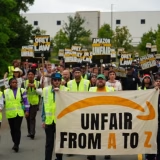
Photo: Adam E. Moreira
The Worker is an entirely volunteer-run revolutionary newspaper free from and radically antagonistic to corporate influence. We rely on the support of our readers to sustain our editorial line in service of the working class and the reconstitution of its party, the Communist Party. Make a one-time or recurring donation to our newspaper today:
Make a one-time donation
Make a monthly donation
Make a yearly donation
Choose an amount
Or enter a custom amount
Your contribution is appreciated.
Your contribution is appreciated.
Your contribution is appreciated.