by Samuel Messidor
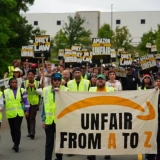
Workers are taking to the picket lines in larger numbers to fight for their rights and better working conditions, according to the Cornell University Labor Tracker. Strikes were up from 272 stoppages in 2021 to 417 strikes and seven lockouts in 2022.
80% of strikes in 2022 were conducted by healthcare and education workers, while workers in those fields only make up 20% of the US workforce.
These two industries are represented so heavily in the strike statistics because they are some of the last bastions of unionization in the US. Further, healthcare, education, and the food service industry have risen to the foreground among unionization efforts and strikes because all three are secondary industries, so the capitalists can put up with turmoil and disruption there for a time, and can even pose as friends to the workers there.
Heavy industry and logistics are affected differently by the capitalist economic crisis, with the crisis of overproduction driving up the cost of living and leading the capitalists to destroy the over-produced means of production (factories, warehouses, and the workforce itself) while increasing the rate of exploitation of workers to a fever pitch. This is why we saw in the last two years a wave of high-profile strikes like those in Frito-Lay fighting against long workdays and for regaining the weekend—the capitalists are turning the screws.
The Biden administration pays lip-service to unions and workers, in particular to these service industry actions. Meanwhile, Biden and Labor Secretary Walsh blocked the strike by 200,000 rail workers to avoid disruptions to the economy—green-lighting the unsafe restructuring the rail monopolies have been putting into place. The same goes for the Warrior Met coal miners strike, studiously ignored by the Democrats and repressed by the Alabama government.
A likely UPS Teamsters strike this Summer could reverse this with over 300,000 workers poised to leave the trucks and warehouses and hit the picket lines, a vast number which would already outweigh the total number of workers who struck in 2022.
Union density is declining still, the percentage of workers in unions has fallen to 10.1% by 2022 from 10.3% a year before, according to the Federal Bureau of Labor Statistics. Meanwhile, the majority of those who went on strike last year did so within their unions. Non-union workers did strike, but in small numbers and for short periods of time.
The long, drawn-out strikes like the one conducted by the Warrior Met coal miners in 2022-23 still accounted for the majority of striking workers, but in terms of number of strikes themselves, the shorter ones took the prize. Shorter strikes are less risky, less expensive for unions, and more readily accomplished by non-unionized workers or unionized workers organizing wildcats. Recall that the West Virginia teachers’ strike of 2018 was organized by teachers on a county-by-county basis, and only then did the national teachers unions come out in support of the strike and the teachers’ demands.
The strike is the basic form of collective action of workers in their fight for better conditions for the sale of their labor-power. The right to strike is the basic worker’s right, without it everything else is a house of straw. Real wages declining with inflation as part of the economic crisis will worsen, so the need to fight will continue to intensify.