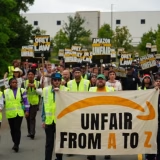
Volunteers with The Worker in New York City interviewed several striking workers at Alamo Drafthouse, a movie theater and dining chain, on March 7. Workers went on strike at two locations—off of Liberty street in Manhattan, and in Brooklyn— on February 14 after Alamo Drafthouse fired around 25% of its theater and dining staff across the country. The mass layoffs come only months after the media monopoly Sony acquired the chain last summer. The strike has since spread to unionized locations in Colorado as well.
Why are you on strike?
“We’re on strike due to the 70 layoffs that happened in the Brooklyn and the Liberty locations of the Alamo Drafthouse. They tried to blame it on it being the slow season, but we know that’s not true—it was a busy weekend, it was Valentine’s Day, so there’s no way it was gonna be slow. And we just want a better environment and our friends’ jobs back.”
“We’re being treated like trash—laying off people with no warning and not considering the fact that we live in New York City, one of the most expensive cities in the country, during a time when we know a bunch of businesses aren’t hiring and aren’t looking for new employees because it’s the ‘slow season’. Using that as a reason to fire people is just asking for people to be thrown on the streets. That is literally treating them like trash. You’re putting them on the curb and they’re not gonna be able to pay rent if they’re relying on your company to pay them, paycheck to paycheck. People rely on that week to week.”
“Our health insurance is awful here. I don’t have health insurance here. We have to get at least 30 hours on average and they keep you under 30 hours a lot of the time unless you’re picking up shifts, which isn’t even guaranteed because if they cut a shift and you pick it up, they might cut it anyway.”
How have the work conditions affected you?
“I have been with Alamo since 2019, I opened up this location at Liberty. Not only do we want more hours and labor, but also more pay for everyone, better safety conditions, better equipment. Our dish pit has been busted for a long time now, and our dishwasher machine keeps breaking, and then when they come to fix it, it breaks again.”
“I started December 8th, 2020 as a shift lead working for the bar. It seemed like I was getting a lot more responsibilities than my pay, between constant trainings at busy times and the turnover rate’s gotten worse in the kitchen alone. I think within six months they went through at least 20+ people.”
What do you see as the trajectory of the struggle?
“We’ve been on strike since Valentine’s Day, February 14th. The plan was to go through 11 days, but we had found out that some management had found out about the 11 days, so we were thinking they’re gonna hold out for us. So we decided that we should just go longer in that case, because not only is it working, but if we go longer, they’re not gonna know when this is gonna end. I think we’ve gotten so much better at setting up pickets, we’ve gotten so much better at flying, so much better at spreading awareness via social media and word of mouth and with the press coming through. We don’t know an exact number, but we know it’ll cost them many, many dollars because of us. We know that, for example at Liberty, they had to reduce the menu, they had to reduce the number of theaters that could be open, they had to reduce the ticket sales, they had to reduce the number of seats. So it’s working—all of that stuff is costing Alamo a lot of money.”
There has been a lot of strike activity over the last several months. What do you attribute this to?
“I think it’s an awareness that working people like you and I don’t have to stand for injustices in the workplace anymore. Especially if you join a union, you have the power to do something like this. You can stand up for yourself, you can stand up for your friends, you can stand up for people that are laid off like we’re doing. I think the fact that unions have been spreading and there’s been more and more people striking and unionizing left and right, I think it just starts a trend that shows the working class can actually do something when we get put through injustices, when people get laid off, when people are put through unfair work environments. We can do something to fight back, we can do something like this, we can make our voices known.”
Any final comments for our readers?
“Any spread of awareness is extremely appreciated. We have donations, we have a mutual aid fund, we have funds for people that got laid off, funds for people that are still on strike. We appreciate all the support, we appreciate people that will cancel their season passes, cancel the tickets and get refunds for their tickets, cancel their events that they had here. Any support has been extremely appreciated and we look forward to keeping up the pressure.”
“The best way to help us is to boycott Alamo Drafthouse. Don’t give them their money.”
Photo: Striking workers and supporters march through the financial district of Manhattan.
The Worker is an entirely volunteer-run revolutionary newspaper free from and radically antagonistic to corporate influence. We rely on the support of our readers to sustain our editorial line in service of the working class and the reconstitution of its party, the Communist Party. Make a one-time or recurring donation to our newspaper today:
Make a one-time donation
Make a monthly donation
Choose an amount
Or enter a custom amount
Your contribution is appreciated.
Your contribution is appreciated.